
rea-games

Reverse-engineer any game, rebuild it in any engine, and prove it plays the same, frame by frame.

Each game below is a rebuild written from a behavior spec. It draws its own art and matches the original's recording on every recorded step.

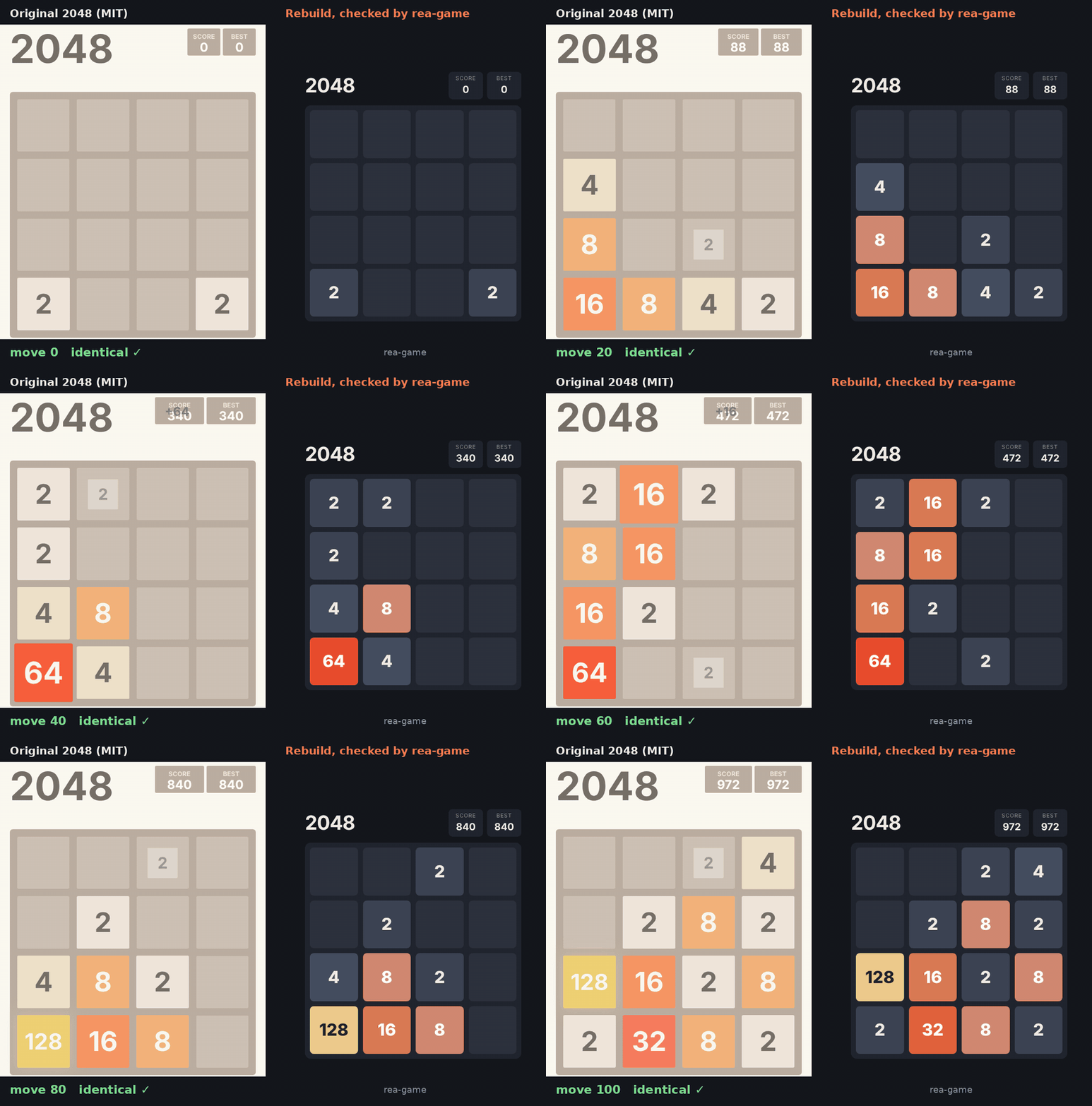
The original 2048 and the rebuild side by side, boards identical on every move

2048

19/19 cases identical · 24,044 inputs Original: gabrielecirulli/2048 (MIT) Play the rebuild
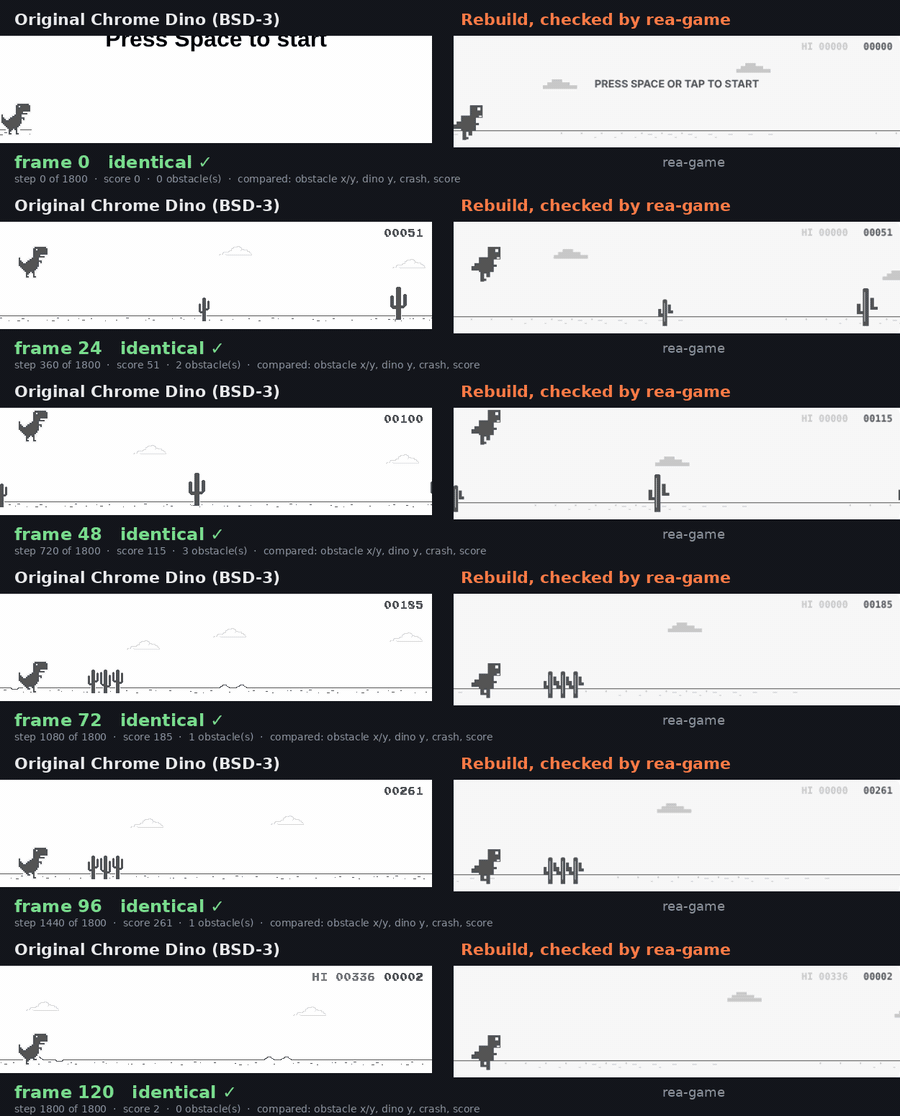
The original Dino and the rebuild side by side, identical state every frame

Dino

29/29 cases identical · 63,000 inputs Original: Chrome's offline dinosaur (BSD-3) Play the rebuild
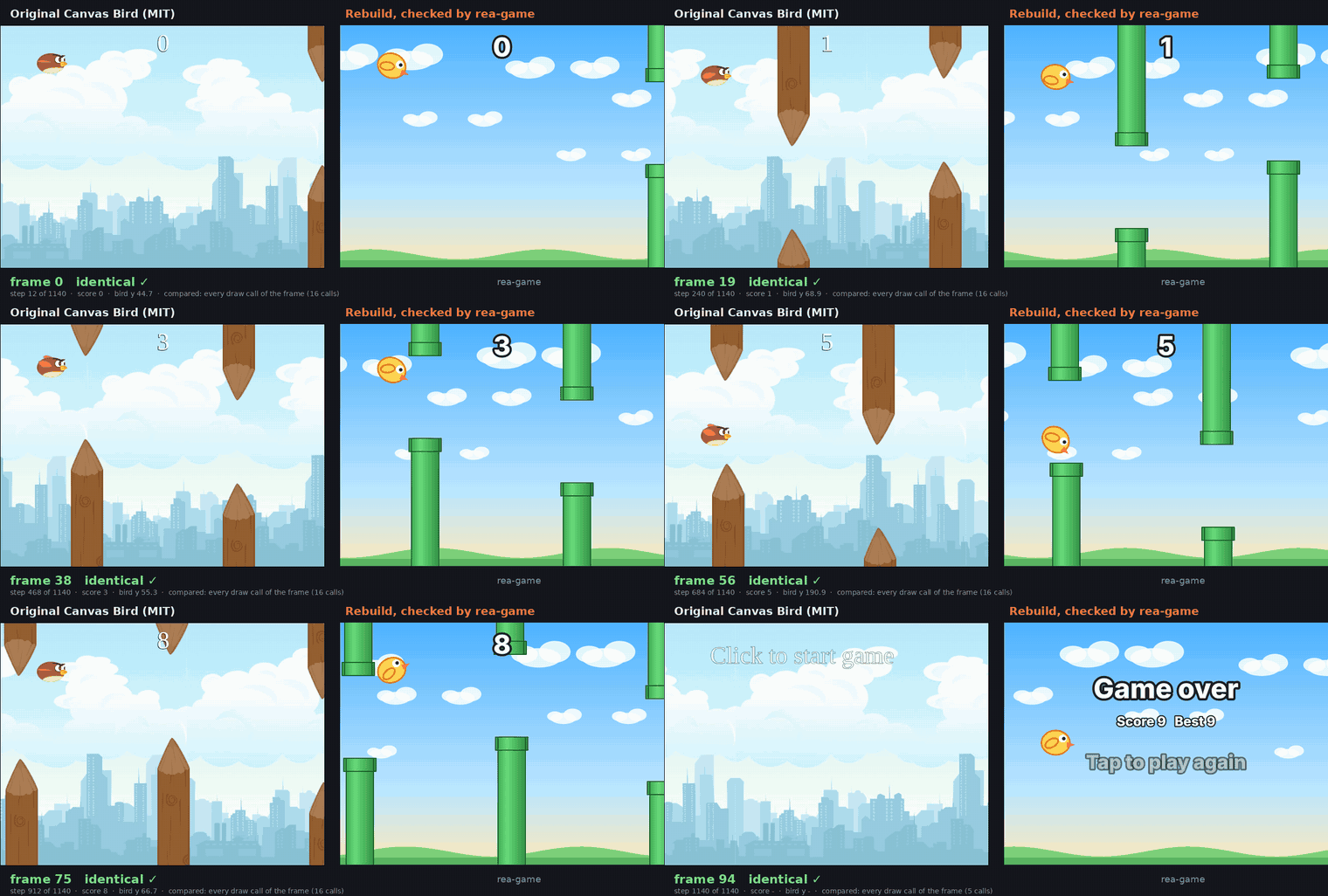
The original Canvas Bird and the rebuild, every draw call identical

Canvas Bird

30/30 cases identical · 68,409 inputs Original: giotiskl/Canvas-Bird (MIT) Play the rebuild
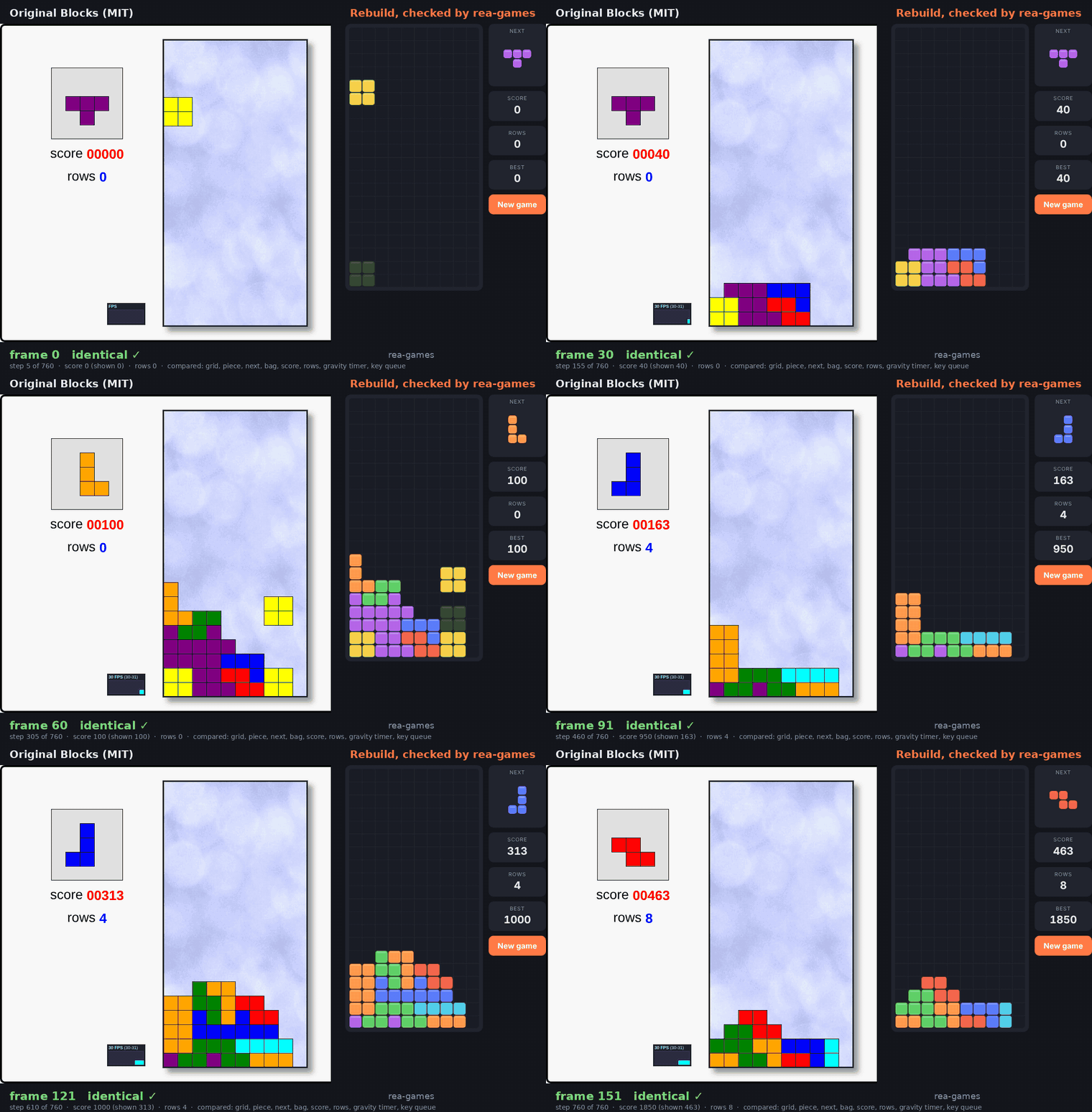
The original Blocks and the rebuild side by side, identical state every frame

Blocks

36/36 cases identical · 104,208 inputs Original: jakesgordon/javascript-tetris (MIT) Play the rebuild
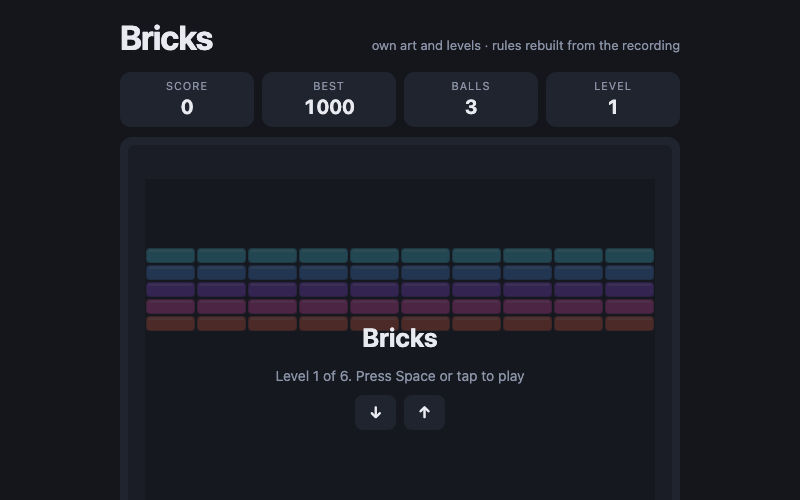
The Bricks rebuild: a wall of bricks and the start menu

Bricks

37/37 cases identical · 209,600 inputs Original: jakesgordon/javascript-breakout (MIT) Play the rebuild
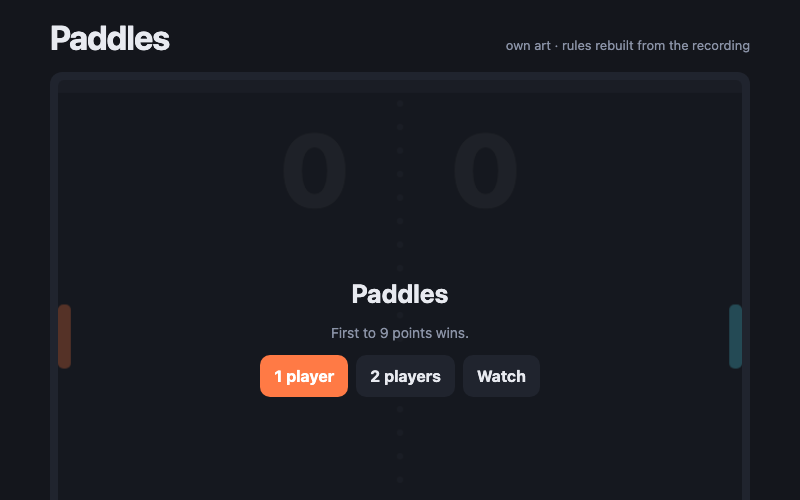
The Paddles rebuild: two paddles and the start menu

Paddles

19/19 cases identical · 198,300 inputs Original: jakesgordon/javascript-pong (MIT) Play the rebuild
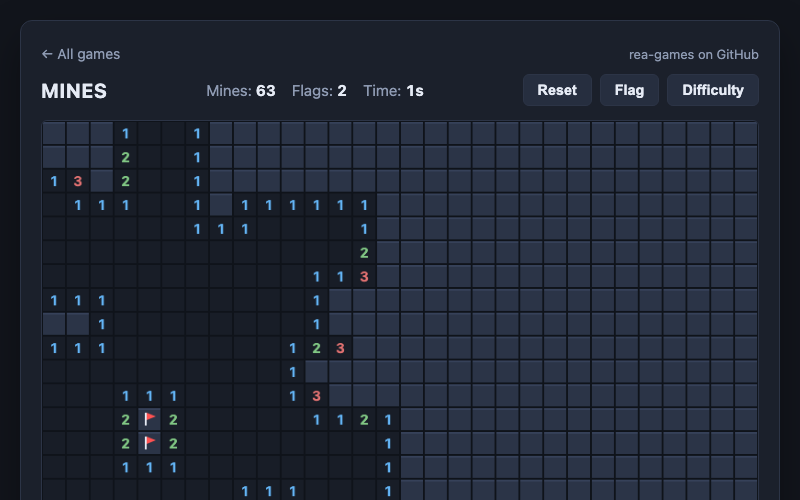
The Mines rebuild: a board in play with numbers uncovered and two flags placed

Mines

14/14 cases identical · 628 inputs Original: Joeynoh/HTML5-Minesweeper (MIT) Play the rebuild

How it works. rea-games runs the original with its clock and random numbers controlled from outside, records the inputs, every random number and the state after each step, and checks a rebuild in any engine against that recording. The first difference is printed with its path.

Rebuild your own. Install the Claude Code plugin and ask: "rea this game: <link>, rebuild it in Godot."